
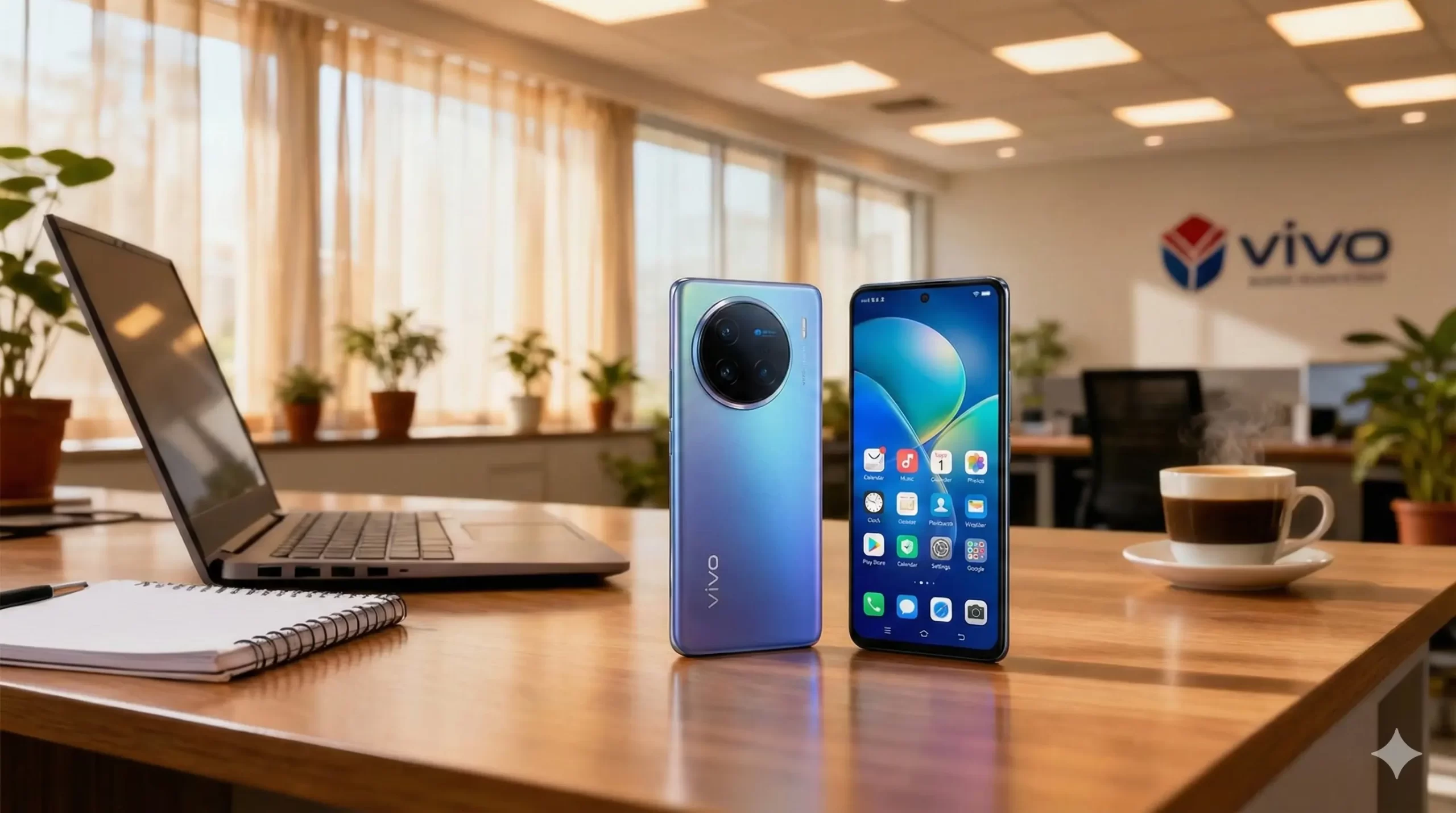
Explore 2025 specs and differences between Vivo X300 and X300 Pro, and understand the rental versus buying debate with real world benefits and value insights.
It may surprise you that both Vivo X300 and X300 Pro include state of the art MediaTek Dimensity 9500 chipsets and Zeiss optics in 2025, yet their camera strategies diverge sharply while their performance potential remains aligned.
In our 33+ years serving Indian businesses in Delhi, Bengaluru, Mumbai and beyond, we’ve seen how imaging precision needs or project cycles raise the rent versus buy dilemma for high tier smartphones.
Read on to discover clear technical differences and smart guidance on whether to hire the X300 or X300 Pro for business projects or long term daily use in an optimized investment strategy.
Deep Dive
Both the Vivo X300 and X300 Pro include the flagship MediaTek Dimensity 9500 processor built on the efficient 3‑nanometre node, paired with LPDDR5x RAM and UFS 4.1 storage, offering blistering subject processing and multitasking performance across India’s dynamic business settings.
The mobile phone rental perspective becomes compelling when a project demands the most current specs without capital expenditure—especially given both models run OriginOS 6 on Android 16, punchy Wi‑Fi 7, Bluetooth 5.4, NFC, and In‑display ultrasonic fingerprint readers.
Key Technical Differences
- Display: X300 Pro uses larger 6.78‑inch 1.5K LTPO AMOLED with Dolby Vision and 4500 nits peak brightness, while X300 stays compact at 6.31‑inch with same peak brightness but no Dolby Vision.
- Camera setup: X300 includes 200 MP main Sony‑HPB with OIS, 50 MP telephoto and ultrawide, while X300 Pro shifts configuration with 50 MP Sony LYT‑828 main, 200 MP periscope telephoto with 3.7x optical zoom, ultrawide and Zeiss V3+ and VS1 chips for pro processing.
- Battery & charging: X300 Pro houses 6510 mAh battery with 90 W wired, 40 W wireless charging; X300 includes 6040 mAh with 90 W wired only.
- Weight and size: Pro weighs around 226 g and 7.99 mm thick; X300 is lighter at 190 g, 7.95 mm thickness.
These differences impact practical value. In hybrid work scenarios, X300 may fit pocket norms of event managers or HR teams in Pune and Noida, while X300 Pro suits photography‑driven event showcases or high clarity livestreaming in Mumbai conferences.
Performance Metrics and Real Usage
Industry trials in late‑2025 show both models sustain 120 fps gaming—even heavy titles like Genshin Impact—without throttling, thanks to Dimensity 9500 and dynamic thermal control. AI tasks like on‑device image recognition run smoothly courtesy of MediaTek’s APU 7.0. Charging benchmarks report X300 Pro reaching 50% in ~15 minutes, full charge taking ~24 minutes; X300 completes full charge in ~28 minutes.
Photography and Video Capabilities
The Vivo X300 Pro’s Zeiss T* optics with fluorite glass and precise colour science deliver cleaner night shots and sharp long distance shots with its 200 MP periscope. It supports 8 K video and Dolby Vision HDR. X300 remains strong with high resolution 200 MP stills and 4 K 120 fps video for everyday needs. For short‑term filming, renting Pro ensures professional imaging without large investment—ideal for advertisers or content teams in Delhi and Hyderabad.
Rental Versus Buying Considerations
- OPEX vs CAPEX mindset suits renting: you stay current without capital tied up in depreciation—helpful for MSMEs and event firms.
- Seasonal demand: For a tech expo in Bengaluru or product launch in Pune, hiring X300 Pro grants cutting edge camera features only for high demand period.
- Upgrades and support: Rental includes maintenance, firmware updates, quick replacement—a practical fit for corporate IT teams avoiding asset downtime.
- Brand awareness value: In visual‑critical campaigns, using a Pro model rental echoes modernity and quality, while preserving capital.
Let’s say a remote team in Mumbai needs devices for press coverage. Renting five X300 Pros for their media kit keeps operations flexible, membership on latest show sites fluid, and deeper pockets for core business preserved.
Key Takeaways
- Both Vivo X300 and X300 Pro run Dimensity 9500 with LPDDR5x and UFS 4.1, offering flagship speed in 2025.
- X300 Pro excels in imaging with Zeiss lens, 200 MP periscope, 8 K video, wireless charging and bigger battery—right choice for camera focused workflows.
- X300 is compact and lighter yet retains high power, ideal for business teams prioritizing portability.
- Renting offers optimized investment strategy during project cycles, supports OPEX planning and avoids depreciation drag.
- IndianRenters’ nationwide network across Delhi, Mumbai, Bengaluru, Pune, Hyderabad and Noida makes getting the latest phones fast and reliable for corporate use.
Wrap-up
If you face the rent versus buy dilemma for high end smartphones in 2025, understanding technical differences between Vivo X300 and X300 Pro refines your choice—compact power or pro imaging. For short term events or startup launches, renting Pro delivers ROI without capital expenditure; for teams needing daily portable power, X300 serves well under long term OPEX planning.